Tokenization

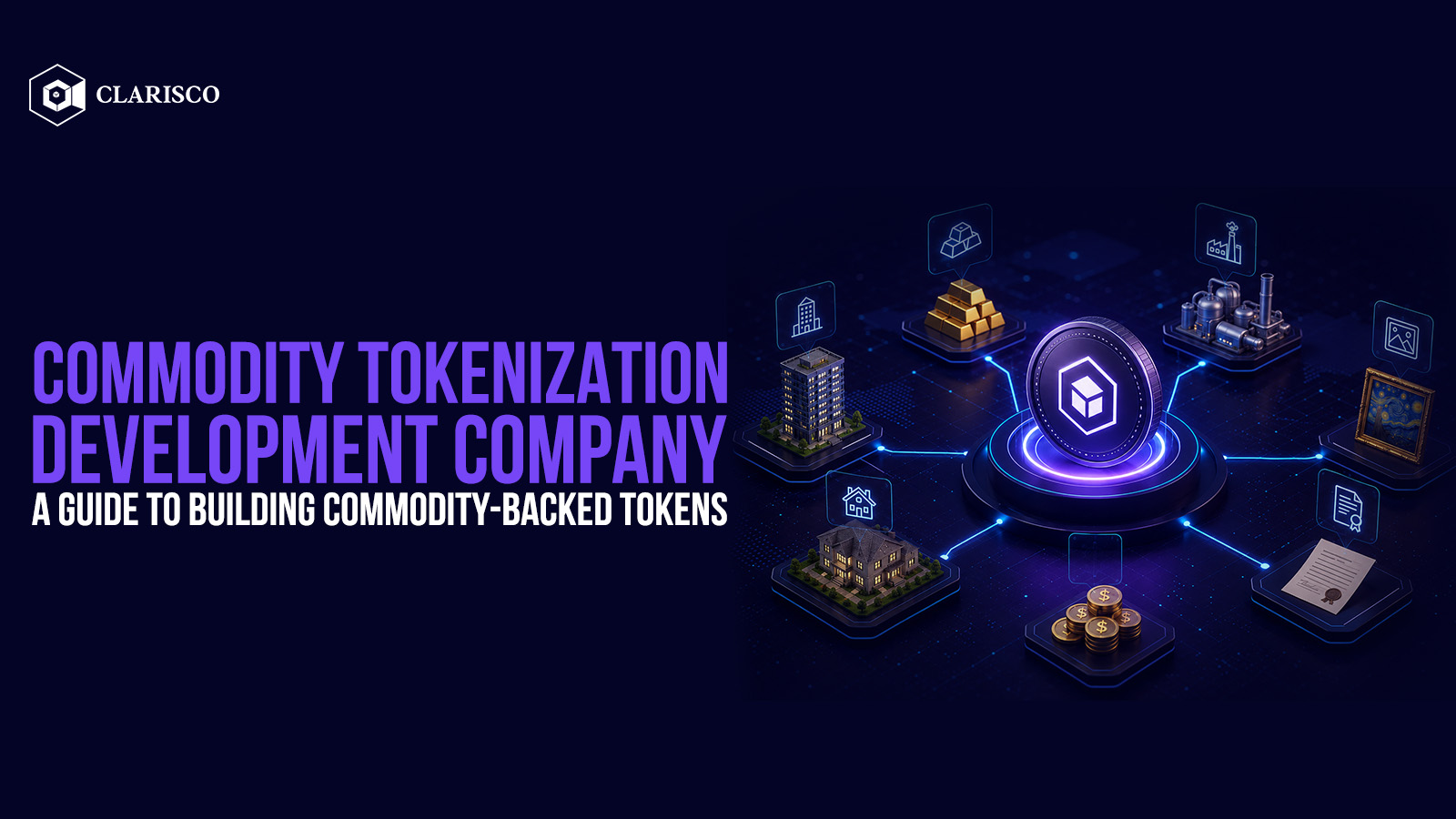
Commodity Tokenization Development Company: A Guide to Building Commodity-Backed Tokens

Share:
Founder

Author

Priyadharshini Suriyanarayanan
Founder Founder

Table of Contents

...

In a span of one year, the tokenized commodities market has increased from $1.9 billion to $7.13 billion, with the gold sector driving this change. Tokenized assets such as XAUT and PAXG have reached 73% of the total market share.

Moreover, trading volume in the first quarter of 2026 has already exceeded the total volume of 2025, and investors own tokenized gold assets on the blockchain instead of buying gold ETFs or keeping gold bars in vaults.

The growth is the reason businesses are choosing commodity tokenization. Each tokenization platform they receive from a commodity tokenization development company takes care of such difficult operations as custody, smart contract creation, compliance, and trading infrastructure creation.

But gold is not the only commodity asset in this list. Electricity-backed tokenization has already achieved a price of $861 million, and the wheat, corn, and soybean tokenization sector has about $300 million in value, meaning that energy and agricultural assets have also started to attract investor interest, although the trading volumes are not very high yet.

This guide will help you understand the process and the cost of creating tokenization platforms for commodities.

What is Commodity Tokenization?

Traditional investments such as gold, silver, oil, and agriculture have always been considered stable, reliable, and tangible. But buying, storing, and trading them has traditionally been slow, expensive, and out of reach for smaller investors.

Commodity Tokenization changes that. It refers to the act of representing the ownership, rights, and economic benefits of tangible commodities as digital tokens based on blockchain technology.

How Does Commodity Tokenization Work?

  • The custodian stores the actual commodity, like gold bars, in a vault, or crude oil in storage facilities.
  • For each unit of commodity stored, there is issuance of an equivalent token is issued (i.e., 1 token = 1 gram of gold).
  • Regular audits confirm that the amount of physical commodity in storage actually matches the number of tokens issued, so every token stays backed by something real.
  • Once tokenized, the asset can trade on exchanges around the clock, in whatever size you want, without anyone having to physically move the underlying commodity.
  • Token holders can typically cash out either by redeeming for the physical commodity itself or by settling in cash.

Types of Commodity Tokenization Platforms

1. Commodity-Backed Token Platform

Each token represents a real amount of a physical commodity held in storage, such as one token equaling one gram of gold. Since people need to trust that the gold is really there, these platforms focus on secure storage and proof that the reserves actually exist. Gold-backed stablecoins are a good example. The main selling point is safety and being able to exchange your token for the real thing.

2. Fractional Commodity Ownership Platform

This makes commodities affordable for regular people. Instead of buying a whole gold bar, you can buy a small piece of one, even just a few dollars' worth. The tricky part for developers is splitting ownership into tiny amounts and making it simple for users to understand what they own, without confusing decimals. This is great for bringing everyday investors into the commodity market.

3. Commodity Trading Platform

This works like a stock exchange, focused on buying and selling often. Speed, live prices, and easy trading are the priorities. Developers spend most of their effort on matching buyers with sellers, getting accurate price feeds, and making the system fast because traders expect a smooth, quick experience, not a slow process full of paperwork.

4. Institutional Commodity Tokenization Platform

It was designed specifically for large organizations like banks, hedge funds, and trading firms. Security and compliance with regulations come first, not ease of use. Only authorized/verified organizations have access to it, with identity verification processes (KYC/AML), full logging for regulators, and, frequently, a private/controlled blockchain, not a public one. The aim is maximum security and processing large amounts of transactions, not an easy registration process.

5. Commodity Investment Platform

Designed for those who prefer to invest long-term rather than trade frequently. It acts similarly to any other investment app that keeps track of your investments, manages them accordingly, measures their progress, and perhaps even allows for regular monthly investments (of $50 worth of gold, for example). Speed isn't as important as ease of use.

6. Commodity Financing Platform

This lets people use commodities as collateral to get loans. For example, a business with stored grain or metal could turn that inventory into tokens and borrow money against it faster than going through a bank. Building this needs tools for lending, figuring out how much the collateral is worth, and rules for what happens if that value drops. It's especially helpful for businesses needing quick cash flow.

Key Features of a Commodity Tokenization Platform

Investor Features

  • User Registration: Investors must be allowed to register and provide the necessary information to participate in the commodity offering.
  • KYC Verification: Prior to purchasing the tokens, the investors must go through identity and eligibility verification. The system should enable users to submit the relevant documents, perform verification, and obtain approval without creating unnecessary complexity in the process.
  • Portfolio Dashboard: After investing in the commodities, investors should have access to the portfolio that will show the token holdings, investment value, purchase price, current value, and ownership of the tokens.
  • Token Purchase: Investors must be allowed to browse through the available commodity offerings and purchase tokens via the payment methods provided by the system.
  • Token Transfer: In case the token is transferable, the system should enable the transfer of the token from one wallet to another approved wallet. The platform will automatically verify if the recipient fulfils the eligibility requirements.
  • Transaction History: All transactions, including purchase, transfer, fees, redemption, and settlement, should be visible in the investor’s account.
  • Wallet Management: Investors should be allowed to connect or manage the wallet and be able to know which wallets are approved to receive and transfer tokens.
  • Asset Information: Investors should have access to the asset information, which includes the description of the commodity, quantity, valuation, custodial information, and all related documents.
  • Redemption Requests: In case the token structure permits redemption, then investors should be allowed to submit a request through the system.

Admin Features

  • Commodity Management: It is necessary for admins to have a single place from which they can manage commodities and their quantities, valuations, ownership, and status.
  • Token Issuance: Token issuance on the platform should be linked to commodity reserves to make sure that the tokens are not issued in excess of assets underlying these tokens.
  • Investor Management: Admin teams should be able to access investor profiles, KYC status, eligibility criteria, approved wallets, holdings, and account restrictions.
  • Compliance Management: Compliance policies can be implemented in the real-world asset tokenization platform for handling issues of investor eligibility, geographic restrictions, KYC/AML requirements, and transfer requirements of tokens.
  • Transaction Monitoring: Rather than examining each transaction one by one, admin teams can monitor and analyze transfers and flag those transactions that are suspicious or restricted, or require manual intervention.
  • Custody Management: As the commodity is stored physically outside the blockchain platform, it is essential to track the custody information, including custodian, location, custody quantity, and last audit date of the physical asset.
  • Reporting: It will be necessary to provide admins with reporting capabilities for token issuance, investor holdings, transactions, reserves, redemptions, and compliance activities.
  • Analytics: Operators of the platform can employ analytics to track metrics like total tokenized assets, circulating tokens, investor activities, trade volume, and redemption activities.

Blockchain Features

  • Smart Contracts: Smart contracts handle the rules behind the tokens, such as issuing, transferring, burning, charging fees, and processing redemption conditions.
  • Token Standards: The platform should choose a token standard based on what the token actually represents. A token representing ownership of a commodity may require different controls from one that only represents an economic interest.
  • On-Chain Transactions: All on-chain activities, including issuance, transfers, and burning of tokens, can be documented on the chain.
  • Automated Settlement: In cases where the payment and delivery of tokens are interdependent, smart contracts can automate the settlement process once all the conditions are satisfied.
  • Role-Based Permissions: All people managing the platform may not necessarily need similar blockchain permissions. Issuers, compliance managers, custodians, and administrators can be granted various types of permissions depending on their roles.
  • Multi-Signature Controls: Sensitive functions such as large-scale issuance of tokens, modification of smart contract permissions, wallet freezing, and major redemptions can be multi-sig controlled.

Commodity Tokenization vs Traditional Commodity Investment

Factor

Traditional Commodity Investment

Tokenized Commodity

Ownership Record

Traditional infrastructure

Blockchain-based

Fractionalization

Often limited

Potentially easier

Settlement

Conventional systems

Blockchain-enabled

Transparency

Depends on intermediary

Potentially greater on-chain visibility

Transferability

Market-dependent

Programmable, subject to restrictions

Compliance

Traditional framework

Can be embedded into platform works

Who Invests in Commodities?

It is not only major investors or trading firms who trade in commodities. Different investors and firms participate in the market for various reasons, from hedging to diversification purposes.

1. Institutional Investors

Investments of pension funds, asset management firms, insurance firms, sovereign wealth funds, and family offices might include commodity assets to mitigate risks and to invest in markets other than equities and bonds.

2. Producers and Consumers of Commodity Products

Firms involved in mining, oil and gas production, agriculture, refining, manufacturing, and processing of commodity products are active participants in the market. Such companies use commodity markets to hedge from price volatility and mitigate risks.

3. Financial Firms

Banks, commodity trading companies, and investment firms help in making the market alive by providing financial services such as financing, trading, custodial services, and commodity-linked investment products.

4. Individual Investors

Individual investors can also be exposed to commodities depending on their location and eligibility. The most common way for individuals to have access to commodity products is via commodity funds, ETFs, and digital investment platforms.

Types of Commodities

Category

Example

Statistics

Precious metals

Gold, Silver, Platinum, Palladium

Most tokenized commodity. Market grew from $1.9B to $7.13B in about a year. Gold tokens (XAUT, PAXG) make up 73% of it. Trading volume in early 2026 already beat all of 2025 | Gold is easy to store, easy to check if it is real, and people already trust it.

Industrial metals

Copper, Nickel, Aluminium, Zinc, Lithium

Almost no tokens yet with real trading

Energy commodities

Crude oil, Coal, Natural Gas, Petroleum products

Just starting. One token for electricity exists ($861M) but barely trades

Agricultural commodities

Wheat, Corn, Soybeans, Rice, Coffee, Cocoa, Sugar, Cotton

Earliest stage. One soybean oil token ($300M) exists, but people are barely trading it

The 8-Step Blockchain Development Lifecycle (And What Really Happens at Each Stage)

1. Business and Asset Analysis

At first, developers conduct a deep analysis of your business processes, user types, and the kind of assets, such as tokens, NFTs, or stablecoins. The result of this stage is usually helpful for making a checklist of requirements.

2. Regulatory and Legal Framework

It is the most essential stage for developers and should not be skipped under any circumstances. Business owners should consider relevant laws in target markets, whether the asset is qualified as a security, what KYC/AML procedures need to be conducted, and what licenses to get for the project. It has to be done beforehand, not during or after the RWA tokenization development process.

3. Platform Architecture

The choice of technology stack, type of blockchain, type of nodes, custody method, etc. This stage results in the architecture diagram and a technical specification.

4. UI/UX Design

Wireframes, prototypes, and a design system, with one additional aspect of taking into account that users will handle real money. All transaction statuses (failed, successful, or pending) have to be easily recognizable because mistakes here will mean a loss of money for users.

5. Smart Contracts Development

This is the stage of developing the blockchain logic itself using such languages as Solidity or Rust. At this stage, each function undergoes unit testing and gas optimization, and all changes get approved at internal reviews.

6. Backend and Blockchain Integration

At this stage, developers integrate contracts with the rest of the system databases, APIs, wallets, payment gateways, oracles, etc. This stage is all about integrating backend and blockchain together and keeping on-chain and off-chain data in sync even in case of chain reorganizations.

7. Security Testing and Audit

All parts of the product undergo deep testing, including static analysis, internal penetration testing, and, most importantly, an external audit. Transactions made using blockchain cannot be reverted, so the audit is critical at this stage. All critical and high-severity findings have to be corrected before going live.

Commodity Tokenization Cost Table

Development Level

Estimated Cost

Basic MVP

$25,000 – $50,000

Standard platform

$50,000 – $100,000

Advanced Platform

$100,000 – $200,000+

Enterprise platform

$200,000 – $400,000+

What Does a Commodity Tokenization Development Company Do?

1. Token Creation & Issuance

Tokenization consists of creating the token standard (for instance, ERC-20 for fungible tokens and ERC-1155 for both types), determining the total quantity, and specifying how each token corresponds to either part or all of the asset, such as one token for one gram of gold.

The development company creates the tokenomics, minting and burning processes, and the metadata to connect each token to the ownership data.

2. Smart Contract Development

The smart contracts are the computer program that controls the commodity tokenization platform. These smart contracts take care of token issuing, transferring, redeeming, revenue sharing, and compliance validation without human interference.

A development company will develop, test, and audit the contracts to make sure that they work as expected, since even a minor mistake in writing the contract could cost a lot of money.

3. Asset Custody Integration

Since tokens are a representation of the actual commodity, there needs to be a reliable way of linking the digital commodity with the actual commodity.

The development companies will link with the vaults where the actual commodities such as gold and oil, among others, are physically stored. This will enable each token issued to be linked to the actual commodity in custody.

4. Proof-of-Reserve Infrastructure

Proof-of-Reserve systems assure investors about the reality of tokens’ 1-to-1 backing with underlying assets.

To do so, developers incorporate auditing processes that involve third parties and oracles to periodically check and reveal reserve information on-chain. This guarantees that the quantity of token supply is equivalent to the amount of assets held.

5. KYC/AML & Compliance Integration

Platforms offering the process of blockchain commodity tokenization work within a highly regulated environment, particularly where tokens fall into the category of being securities or regulated financial instruments.

Commodity tokenization development companies utilize KYC and AML technologies to confirm the identity of investors, check for sanctions against them, and detect any suspicious activity in the transactions carried out by the investors. In many instances, developers design the systems with the inclusion of jurisdiction-specific regulatory logic, considering the fact that regulatory requirements vary from one region to another, such as in the US, EU, and UAE.

6. Trading Marketplace for Tokens

After issuing tokens, investors need a platform where they can buy and sell these tokens. The development firms design commodity trading platforms for tokens with order books, price discovery mechanisms, transaction history, and liquidity pools. These marketplaces may be designed as stand-alone exchanges or integrated within decentralized exchanges depending on the objectives of the platforms.

7. Investor Dashboard

A good investor dashboard provides the necessary interface through which investors can track their investments, transaction history, performance of the portfolio, and available redemption options.

8. Wallet Integration

Token owners should have secure and easy-to-use wallets where they can keep their tokens. A commodity tokenization development services company implements features that are compatible with commonly used crypto wallets (MetaMask or WalletConnect) or creates unique custodial/non-custodial wallets that will be specifically designed for the particular platform.

That involves creating robust security mechanisms, including multi-signature authorization and hardware wallet integration.

9. Payment and Fiat On-Ramp Integration

To allow investors who do not belong to the crypto community to use the platform, developers implement fiat on-ramp/off-ramp solutions that enable token buyers to purchase the tokens in traditional currencies (USD, EUR, etc.) via bank transfer/credit card/payment systems.

10. Secondary Market Formation

Apart from the primary market, numerous systems include secondary market options through which tokens can be resold or exchanged between participants after being issued. This helps increase liquidity and enables investors to close their positions regardless of any redemption periods. Platforms create these markets with proper controls to stay within the rules set by the regulators.

11. Blockchain Technology

Blockchain is the basic foundation for asset tokenization platforms. It provides a secure environment for transactions and enhances speed. The blockchain development company analyses the blockchain options and chooses the one that fits the system, such as Ethereum, Polygon, Binance Smart Chain, Solana, or permissioned blockchains.

Why Choose Clarisco?

Clarisco Solutions is a leading AI and blockchain platform development company specializing in tokenization as part of a broader Web3 offering. Our commodity tokenization services include tokenizing a wide range of commodities such as gold, oil, crops, and metals, and offer a broader RWA tokenization menu covering real estate, carbon credits, and art.

We build on a "no private keys on the server" security model. In one past project, user deposits were auto-swept to admin-controlled storage on a schedule via a cron job, with manual admin approval required for withdrawals, a standard pattern for reducing hot-wallet risk.

We support a wide range of chains and token standards, including ERC20, BEP20, TRC20, Polygon, and Solana.

Beyond the tech stack, our team brings over a decade of full-stack development experience. We don't just hand over a smart contract; we deliver the contracts themselves, KYC/compliance tooling, admin dashboards, and the investor-facing app.

We'd Love To Hear From You!

Know your requirement, our technical expert will schedule a call and discuss your idea in detail. All information will be kept confidential.

Contact Us

Loading...

Skip the queue and book a call with our Founder

Founder
Priyadharshini Suriyanarayanan

Founder & CEO, Clarisco Solutions Private Limited

12+ years in AI, Web3, and enterprise software delivery. Led 650+ product launches across AI agents, generative AI, tokenization, crypto exchanges, DeFi, and NFT platforms. Specializes in AI-driven Web3 product engineering and regulation-ready system architecture.